
Car AC Repair in Dubai: Common Symptoms and Expected Costs
Car AC repair in Dubai becomes necessary when you notice that the air coming from the vents is no longer as cold as it used to be, or when you hear an unusual humming noise when turning on the AC. In Dubai’s hot climate, air conditioning is not a luxury but an essential part of safe and comfortable daily driving.
In this article

Most drivers in Dubai begin noticing AC problems during the summer months, when temperatures rise above 45°C and weak cooling becomes too obvious to ignore. Cold air gradually turns into lukewarm air and then warm air, and this deterioration often happens over several weeks rather than overnight.
There is a specific point when drivers realize the problem can no longer be postponed: when the AC takes more than ten minutes to reach a comfortable temperature, or when it stops cooling completely while the vehicle is stationary in traffic on Sheikh Zayed Road. In such cases, the compressor or refrigerant level may have reached a critical point.
It is not just about comfort. Driving in a hot vehicle can reduce driver concentration and increase fatigue, especially on long journeys between Dubai and Abu Dhabi. That is why having the system inspected at the first sign of weak cooling is generally more cost-effective and safer than waiting for the entire system to fail. At Motors Mechanic, we recommend that customers have their AC system inspected at least once before the summer season begins, because detecting a small refrigerant leak can cost significantly less than replacing a damaged compressor.
Car AC Problems You Should Not Ignore

The first sign most drivers notice is weak cooling. You turn the AC to the highest setting and wait, but the air remains lukewarm or becomes cold only intermittently. In Dubai’s climate, this is not a symptom you should put off addressing. The cause is often low refrigerant, but it can also indicate a blocked condenser or a weak compressor. The longer you delay an inspection, the greater the chance that a minor problem will develop into a costly repair.
Unpleasant odors are another symptom that should not be ignored. A musty or damp smell when you turn on the AC usually means that bacteria or fungi are growing inside the evaporator or air ducts. Dubai’s high humidity makes this problem more common. Cleaning the evaporator and disinfecting the system resolves the issue in most cases, but neglecting it can lead to respiratory problems for people who regularly ride in the vehicle.
Strange noises also deserve your attention. A hissing sound may indicate a refrigerant leak, while clicking or rattling noises when the AC is turned on often point to compressor bearing wear or debris entering the fan. The compressor is one of the most expensive components of an AC system, and detecting unusual noises early can save you from having to replace the entire unit.
Water leaking into the cabin is another symptom that many people mistakenly consider a minor issue. If you find a pool of water underneath the dashboard or on the passenger-side carpet, the cause is often a clogged condensate drain tube. Water accumulates instead of draining outside the vehicle, eventually causing persistent moisture, unpleasant odors, and corrosion of electrical wiring. Cleaning the drain tube is a quick procedure at most car AC repair workshops, but leaving the problem untreated can develop into a more serious electrical issue.
If you notice any of these symptoms, it is better to schedule a quick inspection rather than wait. Some faults start as minor problems and can multiply in repair costs within just a few weeks. Early inspection at a specialized workshop can accurately identify the cause before it develops into a failure that leaves your vehicle without AC during the peak of summer.
Car AC Refrigerant: When It Gets Low and How It Affects Cooling
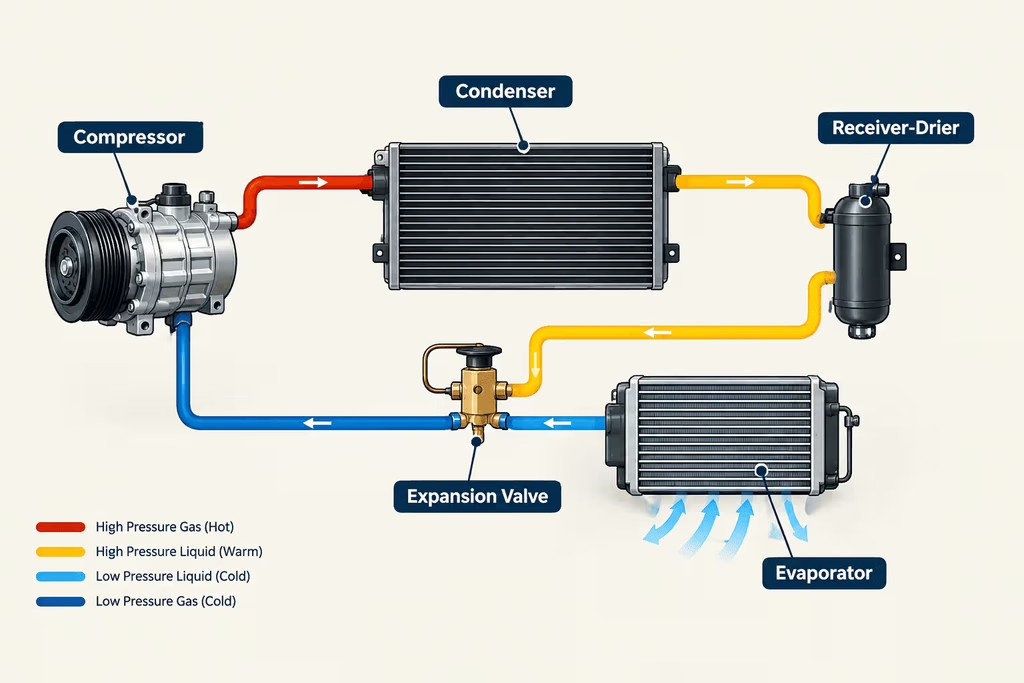
Car AC refrigerant is the fluid that circulates through the air conditioning system, absorbing heat from the cabin and releasing it outside the vehicle. When the refrigerant level is correct, the air coming from the vents becomes cold within a few minutes of starting the engine. When the refrigerant level drops, even slightly, cooling gradually becomes weaker until the air coming from the vents becomes lukewarm or almost warm during the hottest days of summer.
The clearest sign of low refrigerant is when the AC operates but does not cool as effectively as it used to. You may also notice that the compressor runs for longer periods than usual or repeatedly switches on and off as the system attempts to compensate for the low refrigerant level. In some vehicles, you may hear a faint hissing sound from the dashboard area when the AC is turned on. This can indicate refrigerant passing through a restricted opening because of low system pressure.
One point many drivers overlook is that simply recharging the refrigerant does not solve the problem if there is a leak. Refrigerant is not consumed like fuel; it circulates through a sealed system. If the level is low, there is usually a leak somewhere in a connection, hose, condenser, or evaporator. Recharging the system without checking for leaks means you may pay twice: once for the recharge and later for the actual repair when the refrigerant leaks out again.
For this reason, any reputable car AC repair workshop should begin by checking system pressure and performing a leak test before adding refrigerant. The inspection can accurately identify the location of the leak, whether it is a cracked hose, faulty valve, or condenser damaged by a stone on the road. Only after the leak has been repaired does recharging the system make sense and provide lasting results.
In Dubai’s climate, where AC systems operate for most of the year, the system is exposed to greater stress than in many other cities. High temperatures increase refrigerant pressure within the system, and even a small weak point can eventually develop into a noticeable leak. Checking the refrigerant level every 12 to 18 months can help prevent unpleasant surprises during the peak of summer.
Car AC Repair Cost in Dubai: Factors That Determine the Price
There is no fixed price for car AC repair in Dubai because the cost depends on the type of fault and the replacement parts required. A simple refrigerant leak and recharge may cost significantly less than replacing an entire compressor. The difference between the two can be substantial. That is why it is a mistake to compare two workshops based on a single price without knowing exactly what is included.
The four main factors that determine the actual repair cost are:
- Type of fault: A refrigerant recharge is usually one of the least expensive services. Replacing a cabin filter or pressure sensor generally falls somewhere in the middle. A new compressor or leaking evaporator is more expensive because it involves both the cost of the part and additional labor.
- Vehicle brand: Replacement parts for Lexus and Nissan vehicles can differ significantly in price from those for European cars. Some models require the entire dashboard to be removed to access the evaporator, which can substantially increase labor costs.
- Type of replacement parts: Genuine parts are more expensive than aftermarket alternatives, but they may offer better durability in Dubai’s hot climate. A good car AC repair workshop should explain both options before starting the work.
- Amount of work required: Repairing a small leak is not comparable to rebuilding an entire AC system after compressor failure and metal debris has circulated through the system.
A general price range in Dubai can vary significantly: basic AC refrigerant recharging may start at a relatively low cost, while compressor replacement can cost several times more. Do not treat these figures as an official quotation, as the actual price depends on the vehicle model, year, and extent of the damage.
Be cautious of unusually low prices. A workshop offering a complete repair at a price far below the market rate may be using poor-quality refrigerant or counterfeit parts, or may simply be performing a temporary recharge without repairing the underlying leak. The result is often the same problem returning within weeks, meaning you pay twice. At Motors Mechanic, we explain the cost before starting the work and clarify what is causing the price to increase or decrease for your specific vehicle.
Always request a written diagnostic report identifying the fault, required replacement parts, and the individual cost of each item. This protects you from unexpected charges and makes it much easier to compare different repair quotations.
Car AC Repair Workshop: How to Choose the Right One
Choosing a car AC repair workshop in Dubai should not be a random decision, especially during the intense summer heat when any delay in repairing the system can become a genuine problem. One of the first things we recommend is looking for a workshop that uses computer diagnostics to accurately identify AC faults, because relying on guesswork can result in spending money on parts that do not actually need replacement.
A warranty on repairs and genuine replacement parts are two standards that should not be overlooked. A reliable workshop should clearly explain what will be replaced, why it needs to be replaced, and provide a written warranty for the work. This protects you from future problems, such as a refrigerant leak returning just two weeks after the repair.
At Motors Mechanic, we use modern diagnostic equipment and genuine replacement parts for Lexus, Nissan, and other vehicle brands, with a clear warranty on every service. Our team explains the problem in simple terms before starting any work, so you know exactly what is happening with your vehicle before you pay for the repair.
- Always request computer diagnostics before approving any repair.
- Make sure there is a written warranty covering the work and replacement parts.
- Ask about the workshop’s experience with your specific vehicle brand.
- Compare car AC repair costs from at least two workshops before booking.
If a workshop refuses to explain the repair details or avoids providing a warranty, consider this a warning sign. A reputable workshop should operate with complete transparency and provide a detailed invoice showing every replacement part and labor charge.
Car AC Repair Step by Step
When you book an appointment at a car AC repair workshop, the process usually follows a series of clear steps, beginning with diagnosis and ending with a final cooling-performance test. Understanding these steps can give you greater confidence and help you understand the invoice you receive.
The first step is a visual and auditory inspection. The technician opens the hood and checks the condition of the compressor, belts, and hoses. They look for oil residue or dye traces that could reveal where refrigerant is escaping. The technician then connects a pressure gauge to the service ports to measure the high- and low-pressure sides of the system.
The second step is leak detection. If the pressure reading is low, the technician may add a refrigerant containing UV dye and run the AC system. After several minutes, the system is inspected using a special UV light. The leak appears as a green glow at the point where refrigerant is escaping. This method helps determine whether the problem is located in the connections, evaporator, condenser, or another component.
The third step is recovery and evacuation. Before carrying out repairs, the technician removes any remaining refrigerant using an approved recovery machine. After the damaged component has been repaired, the system is evacuated of air and moisture using a vacuum pump for at least 30 minutes. Moisture inside the system can cause internal corrosion and reduce cooling efficiency.
The fourth step is recharging the AC system with the correct amount of refrigerant. The required quantity is determined according to the manufacturer’s specifications rather than estimated. Overcharging increases system pressure and can damage the compressor, while undercharging results in poor cooling performance. The technician uses an electronic scale while charging the system to ensure the correct refrigerant quantity.
The fifth and final step is performance testing. The technician runs the engine and AC at the highest fan setting and measures the temperature of the air coming from the vents. In a properly functioning vehicle under suitable test conditions, vent temperatures can be around 4–8°C. The technician also checks system pressure during acceleration and makes sure there are no unusual noises.
At the end of the service, you should receive a report explaining which component was repaired, how much refrigerant was added, and the results of the cooling-performance test. A reliable car AC repair workshop should not return the vehicle until it has confirmed that the system is operating properly.
Common AC Problems in Lexus and Nissan Cars
In Dubai, we see AC problems recurring in a clear pattern among Lexus and Nissan vehicles. Lexus cars, particularly LS and ES models, often experience slow refrigerant leaks through compressor connections. The first sign is usually intermittent cooling that improves at higher speeds and then disappears when the vehicle stops at traffic lights.
For Nissan Patrol and Altima models, the most common problems we see are a clogged expansion valve or a weak condenser fan. The result is similar: cold air at first, followed by lukewarm air after around 15 minutes of driving. This pattern differs from a refrigerant leak, which is why we always begin by checking system pressure before replacing any components.
With Lexus, we also inspect the evaporator temperature sensor because a faulty sensor can cause the compressor to run continuously and eventually freeze up. With Nissan, we check the compressor oil level because low oil can cause a light clicking noise when the AC is switched on in the morning.
Motors Mechanic deals with these problems every day, and we keep compatible replacement parts for the most common Lexus and Nissan models in the UAE. Accurate diagnosis can save you from unnecessary AC repair costs, especially when the problem is caused by a small sensor rather than the compressor itself.
Preventive Car AC Maintenance in Dubai’s Climate
Dubai’s summer heat is unforgiving, and even a small lapse in AC maintenance can quickly turn into an expensive failure. Prevention is much cheaper than repair, and it starts with one simple habit: run the AC at least once a week, even during winter, for at least ten minutes. This helps keep the seals flexible and prevents them from drying out and cracking, which can be a common issue in vehicles that remain parked for long periods.
The cabin air filter deserves particular attention in Dubai’s climate. Fine dust can clog it faster than you might expect, and a blocked filter forces the AC system to work harder while reducing cold-air flow. Clean or replace it every 10,000 to 15,000 kilometers, or whenever you notice reduced airflow from the vents. For Lexus and Nissan vehicles in particular, we recommend checking the filter with every oil change because Gulf dust can accumulate quickly.
Check the AC refrigerant level at least once a year, even if the cooling appears to be working properly. A slow refrigerant loss may not be immediately noticeable, but it can cause the compressor to operate for longer periods and increase fuel consumption. If you hear a faint hissing sound when turning on the AC or notice a musty smell when it starts, this is an early warning sign that the system should be inspected before the problem gets worse.
One final tip for Motors Mechanic customers: do not wait until the AC stops cooling completely. A simple inspection every six months can identify refrigerant leaks and worn seals before they develop into expensive AC problems. In a climate like Dubai’s, air conditioning is not a luxury; it is an essential part of everyday driving comfort and safety.
When Repair Is Not Enough and Parts Need to Be Replaced
Some AC problems can be resolved quickly, such as recharging the refrigerant or cleaning the filter. However, there are situations where a temporary repair only postpones the underlying problem. The compressor is the heart of the cooling system, and when grinding noises begin or the electromagnetic clutch stops working, recharging the refrigerant will not restore cooling. In such cases, replacing the compressor may be necessary to prevent the same problem from returning every few weeks.
The condenser, which is mounted in front of the radiator, is exposed to stones and sand on Dubai’s roads. Small leaks can sometimes be repaired, but extensive corrosion or internal blockage may make replacement more practical than repeated repairs. As a general rule, if the repair cost exceeds 60% of the price of a new component, replacement may be more cost-effective in the long term.
At a specialized car AC repair workshop such as Motors Mechanic, the technician begins by checking system pressure and performing a leak test before making any recommendation. This helps prevent you from paying twice for AC repairs caused by the same underlying problem. Sometimes the receiver-drier or expansion valve is the damaged component. These parts are less expensive than the compressor, but neglecting them can eventually damage the entire system. Replacing a small faulty component early can help prevent compressor replacement later.
If you hear a continuous hissing sound or notice that the AC alternates between cooling and warming, do not wait. A detailed inspection through Contact Us can determine whether a repair is sufficient or whether replacement is necessary before the cost increases further.
Frequently Asked Questions About Car AC Repair in Dubai
Before booking an appointment at a car AC repair workshop, it is natural to want to know exactly what to expect. These questions cover some of the most common concerns raised by car owners in Dubai when dealing with AC problems.
How Much Does AC Repair Cost in Dubai?
Car AC repair in Dubai typically costs between AED 300 and AED 1,500, depending on the type of problem. A refrigerant recharge alone may cost around AED 150 to AED 400, while compressor replacement can exceed AED 1,500. Request a diagnostic inspection first to receive an accurate quotation before any work begins.
How Long Does Car AC Repair Take?
Most car AC repairs take between two hours and a full working day. A refrigerant recharge may be completed within an hour, while replacing an evaporator or compressor can take longer because the technician may need to remove parts of the dashboard. Ask the workshop for a clear time estimate when booking.
What Are the Signs of Low AC Refrigerant?
The main signs of low AC refrigerant include weak cold air that gradually becomes warm, along with clicking or unusual sounds coming from the compressor area. You may also notice that the AC operates intermittently or that the compressor does not disengage normally. Early inspection can help prevent compressor damage caused by inadequate lubrication.
Does the Workshop Provide a Warranty on Car AC Repairs?
Reputable repair workshops in Dubai commonly offer warranties ranging from 3 to 12 months on parts and labor. Ask about the warranty period and exactly what it covers before approving the repair. A written warranty provides protection if the same problem appears shortly after the car AC repair.
Can I Drive the Car If the AC Is Not Working?
Yes, you can usually drive the vehicle temporarily, but during Dubai’s summer heat it can quickly become uncomfortable and potentially unsafe. More importantly, some AC-related faults can affect the vehicle’s overall cooling system, particularly if the compressor has seized. Do not delay an inspection if you hear unusual noises coming from the AC belt or compressor area.